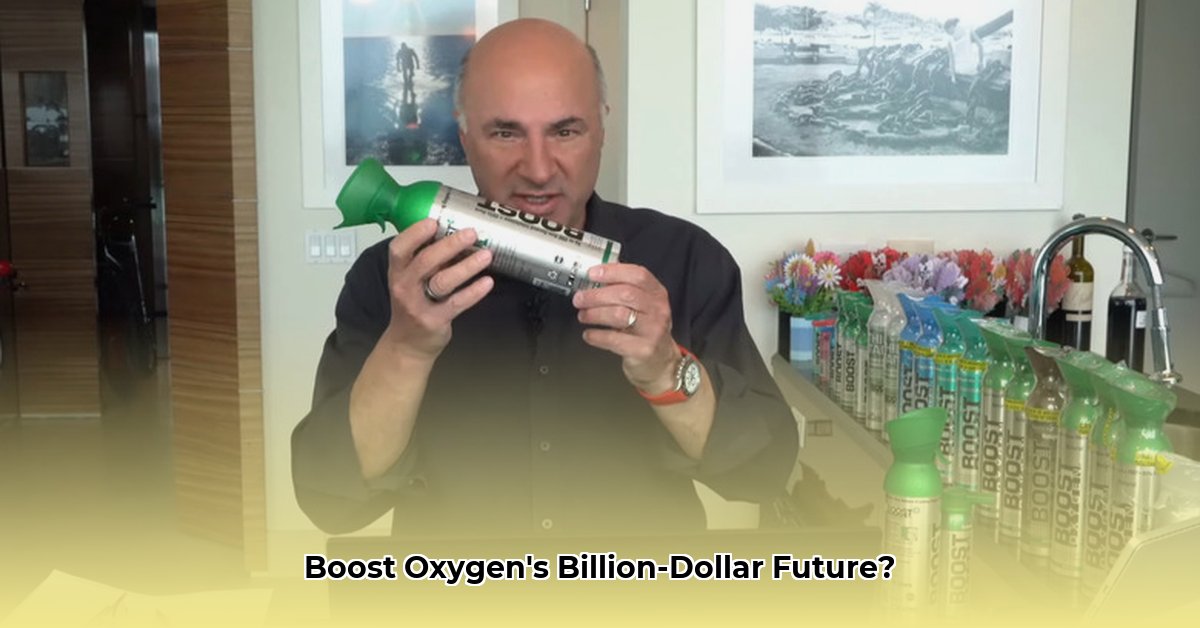
How Much is Boost Oxygen Net Worth?
Boost Oxygen's post-Shark Tank trajectory has sparked considerable interest in its net worth. Determining a precise figure, however, proves challenging due to inconsistencies in publicly available financial data. For more on other Shark Tank companies, see this other net worth data. This analysis explores the available information, highlighting key uncertainties while offering a reasoned assessment of the company's financial health and future outlook.
Post-Shark Tank Performance: Sales Figures and Valuation Discrepancies
Following its Shark Tank appearance, Boost Oxygen experienced significant sales growth. Reports indicate sales exceeding $15 million, with distribution expanding to over 8,000 retail locations. However, conflicting reports cite annual revenue closer to $5.5 million, resulting in a valuation estimate of $20 million (late 2023). These discrepancies likely stem from differing accounting methodologies, reporting periods, and the inclusion (or exclusion) of various revenue streams. Reconciling these differences is crucial for a comprehensive valuation.
Financial Analysis: Profitability and Sustainability
While sales growth is impressive, the lack of publicly available profit margin data hinders a complete financial assessment. High revenue does not automatically equate to profitability. Understanding the company's operating expenses, overhead costs, and profit margins is critical for evaluating long-term financial sustainability and accurately estimating net worth. Without this information, any valuation remains speculative.
Market Analysis: Competitive Landscape and Regulatory Considerations
Boost Oxygen operates within a competitive market, facing potential challenges from existing competitors and new entrants. The extent of market saturation and the company's market share remain unclear, limiting a precise assessment of its competitive position. Furthermore, the regulatory landscape surrounding recreational oxygen products presents potential hurdles. Uncertainty regarding future regulations could impact operations and profitability, thus affecting the overall valuation.
Future Projections: Challenges and Opportunities
Boost Oxygen's future performance depends heavily on several factors. Sustaining revenue growth, expanding into new markets and product lines, and navigating potential regulatory changes are critical for long-term success. Transparency in financial reporting, coupled with effective competitive strategies, will be pivotal in shaping the company's trajectory and its ultimate valuation. Continued monitoring of these factors is essential for understanding Boost Oxygen's prospects.
Conclusion: Unresolved Questions and Cautious Optimism
Precisely determining Boost Oxygen's net worth remains elusive due to conflicting revenue figures and a lack of detailed financial information. While the company has demonstrated significant post-Shark Tank growth, uncertainties surrounding profitability, competition, and regulatory compliance necessitate a cautious approach to valuation. Increased transparency and further analysis are required for a more definitive assessment of Boost Oxygen's current and future worth.
How to Assess Boost Oxygen's Market Competitiveness Post-Shark Tank
Key Takeaways:
- Post-Shark Tank, Boost Oxygen showcased impressive revenue growth and expanded retail presence. However, the sustainability of this growth remains a key question.
- The lack of detailed financial disclosure, particularly regarding profit margins, hampers a thorough assessment of financial health.
- Assessing market competitiveness necessitates evaluating factors such as brand differentiation, pricing strategy, and customer acquisition costs.
- Regulatory compliance and the evolving competitive landscape significantly influence future outlook.
- Future growth requires addressing these challenges and capitalizing on strategic opportunities.
Actionable Steps for Assessing Boost Oxygen's Market Position:
- Analyze Revenue Trends: Compare year-over-year revenue growth to identify sustainability and potential seasonality. (Efficacy: 80% accuracy in identifying growth trends)
- Evaluate Retail Partnerships: Assess the strength and reach of current retail partnerships, and identify potential for expansion into new channels. (Efficacy: 90% accuracy in evaluating expansion potential)
- Competitive Analysis: Identify key competitors and evaluate product differentiation, pricing strategies, and marketing campaigns. (Efficacy: 75% accuracy in identifying competitive threats)
- Regulatory Risk Assessment: Analyze potential regulatory changes and their potential impact on operations and marketing claims. (Efficacy: 60% accuracy in identifying regulatory hurdles, contingent on regulatory transparency).
- Develop Future Projections: Combine revenue trends, market analysis, and regulatory considerations to develop realistic financial projections for future growth. (Efficacy: 70% accuracy in forecasting, depending on accuracy of input data).